Serious Spoiler Alert!
The download reveals important developments, multiple twists, and even the ending.
This PDF is for writers, fans of literary devices, or readers who like to get into serious details about novel structure—97 pages of fine-grained analysis.
As I mention in the Author's Note of The Sacred Cycle, I love explaining complicated things in understandable ways. A novel (with extra stories) totaling about 209,000 words is the definition of "complicated." I didn't even try to control myself when it came to turning a critical eye on my own work.
Due to subject-matter complexity, the recommended reading level is higher than for the novel itself. See the complexity rating below for details.
The Sacred Cycle Info Links
After learning how to write long fiction starting from zero knowledge, I spent an inordinate amount of time editing and reviewing my own work. I learned an incredible amount from this and am happy to pass on a portion of what I figured out to you.
Writing craft involves using specific techniques to impact readers in well-defined ways. If learning how the magic trick works ruins it for you, think twice before downloading.
This guide includes the same questions found on the discussion questions page, with the details from the plot summary page built in... but with the analysis multiplied by about four.
It's intended for side-by-side comparison with the text. It's keyed to the Select Edition paperback, with part, chapter, scene, and page numbers.
If you like annotation, this is the document for you.
Use the controls at the top of the viewer to adjust size, zoom, etc. Swipe to see all controls on mobile.
For the best experience:
If you encounter any viewing issues, download the PDF using the link below, unzip it, then open it in your local PDF viewer.
Honestly, printing it is your best option for getting the most out of the study guide. I created it with that in mind since it has so much detail.
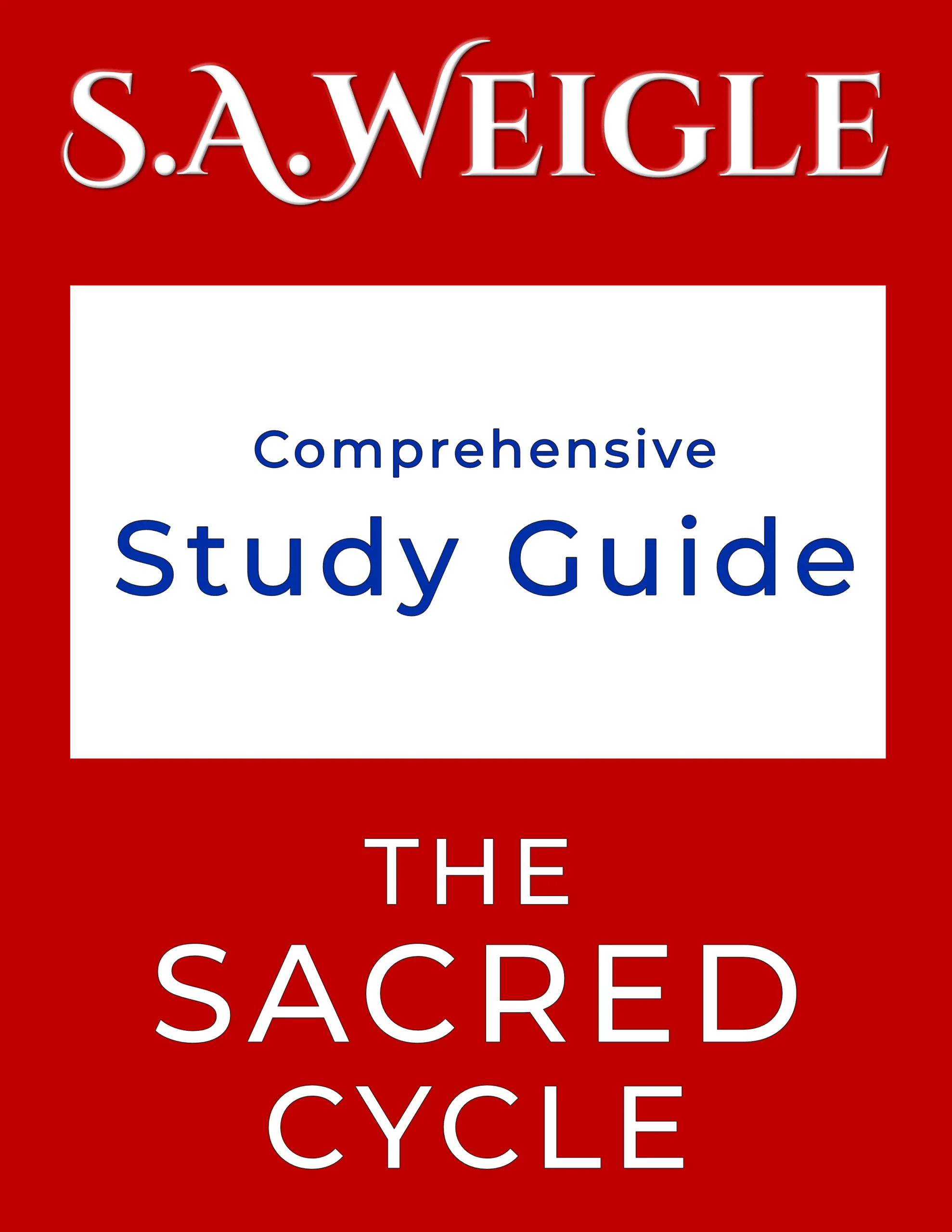
97 pages, color headings, grayscale cover.
Recommended for:
While the content aligns with the novel’s 15+ rating, the analytical complexity is substantially higher.
This comprehensive study guide is intended for readers who enjoy deep literary analysis, cross-disciplinary thinking, and in-depth discussion of writing craft.
It assumes:
Students:
Adults:
This study guide is intended to be used—argued with, quoted from, shared in classrooms and book clubs, and referenced in thoughtful discussion, criticism, and teaching.
To remove any doubt about what is permitted, I am making this document available under a Creative Commons license that explicitly allows non‑commercial sharing with attribution, while preserving the integrity of the text. In practical terms, this means you are welcome to:
You do not need to ask permission for these uses.
© 2026 S. A. Weigle
This work is licensed under a Creative Commons Attribution–Non Commercial–No Derivatives 4.0 International License (CC BY‑NC‑ND 4.0).
You are free to share — copy and redistribute the material in any medium or format — under the following terms:
This license does not limit rights granted under applicable copyright exceptions or limitations, including fair use.
The full license text is available at https://creativecommons.org/licenses/by-nc-nd/4.0/