I COME FROM A LONG sheep-raising tradition.
The two generations before mine grazed thousands of them in the area of Sun Valley, Idaho. By my generation, the legacy had shrunk, but we still pastured up to a hundred on our small farm.
Which is to say, I became familiar with herd behavior long before social media shepherded all of humanity into like-minded flocks.
Rubbing wool makes a person feel secure. But herds are often well-padded thought prisons for writers.
Lone-wolfing isn’t a good solution for someone who wants to write for the masses. It’s too lonely and too cynical for long-term mental health and cultural relevance.
But lone-sheeping…
That’s a strategy that any aspiring writer can implement if they’re willing to trek through life much closer to the edge of the herd than the center.
TL;DR: Introverted writers, the future belongs to you.
“Most people are other people. Their thoughts are someone else’s opinions, their lives a mimicry, their passions a quotation.”
~ Oscar Wilde
Not all fiction needs to challenge readers
This discussion doesn’t apply to all fiction writers. Not even close. Let’s narrow this discussion down to a certain contingent:
Those who want to introduce ideas, even controversial ideas, to a wide audience to make them consider perspectives they wouldn’t otherwise.
I’m talking about the aspiring writers of books that strive to change the world, if only a bit.
This phrase, “change the world,” usually goes undefined when it’s tossed around casually. I’ll provide my definition: Write stories that demand discussion and reward analysis.
Perhaps a better phrase would be “change the reader’s world” since that’s our only lever for impacting the larger mass of humanity.
Such books aren’t limited to any particular genre. World-changing messages can be wrapped in young adult coming-of-age dilemmas, sweeping epic fantasies with difficult heroes, and romance-driven social-status predicaments.
The distinction is that the writer is challenging the audience, not intentionally serving up exactly what the audience expects.
We all like our comforting content. But sometimes what herd members need is a bit of discomfort in their lives.
Herds limit perspective
To present challenging ideas, one must first encounter those ideas and understand them.
It’s extremely difficult to gain a perspective that can challenge a herd when you’re in the middle of it.
We all know the effect of the algorithm on our diet of information. It’s not difficult to understand that if your diet is the same as everyone else’s, you’ll have very little new to bring to your writing.
Worse, you won’t be able to create characters who are relatable to the broader public if you’re rarely exposed to people who hold opinions that aren’t in sync with your own.
Herds enforce consensus
Your herd provides many things that are important to humans: Safety. Consensus. Direction.
And most significantly for this discussion: Status.
Herds don’t respond well to those who stand out. Anyone attempting to be even slightly different in a way that threatens the status quo finds out very quickly that the reaction is immediate and often dire.
The ancient parts of our brains learned long ago that expulsion from the tribe equals death. This is why the consequences feel existential.
In the modern social media era, people don’t even have to go full black sheep to discover this. You’ve seen enough slightly-off-color sheep lose all status and be instantly expelled from the herd to internalize the message: Don’t challenge consensus if you want to maintain status among your peers.
But challenging prevailing wisdom is what’s required to alter perspectives, which is a prerequisite if you want to be one of those author’s whose goal is changing the world with your written words.
Is your herd limiting your fiction future?
Here’s a test:
Think of a belief or opinion that is 100% required for members of your current herd to hold, with no deviation accepted. It might be political, or religious, or simply long-established-but-little-questioned “wisdom.”
Next, imagine a nuance that could reasonably be brought up that slightly challenges the reigning belief. Something that pushes back a bit, maybe grants some benefit of the doubt to the designated enemies. Nothing too radical.
Finally, write it up. Create a short post expressing this slightly heretical notion. Make it polite, not even a bit inflammatory. A single sentence will suffice if it carries the idea.
Now imagine posting it.
Could you take the consequences? Could you refuse to soften it, apologize, or take it down?
Could you even stop yourself from reading the comments at all? Just let it sit there, a bold statement of your right to have an opinion, without caring whether or not others agree?
If your answer is, “I do that all the time. Not a big deal,” then congratulations! You’ve already earned the lone-sheep mithril rank.
But if your answer is, “Are you kidding me? I’ll be a smoking pile of cinders in five minutes!”—then your future as a fiction-based challenger of established dogma is going to be a very, very hard lift.
Who are you desperate to maintain status with?
Who will you flatter—and who are you willing to disparage—to maintain that status?
Upon these questions rests your future as an author.
More of the same doesn’t move the needle
Do the readers you want to reach need another book repeating what they’ve already heard? What they get all day long? That’s what AI is getting better and better at producing.
If your top goal in life is to emulate the latest influencer your friends are obsessing over, readers don’t need what you are equipped to say. Some readers may enjoy it, but none of them need forgettable content.
The books that endure often come from authors who noticed something the crowd missed, articulated something others felt but couldn’t express, or connected ideas that weren’t supposed to belong together.
Professional pressure can be very limiting
Is your consensus-enforcing herd your writing community?
If so, the pressure is built into the plot, so to speak. Such a herd may be doing more to limit your world-changing-author potential than any other status-maintenance structure you belong to.
Using your art only to express “correct” opinions to your peers isn’t a productive professional growth strategy.
I know. Your writing friends are “your people.” The ones who best understand you. Your strength and your solace as you brave the turbulent, icy waters of publishing. They can be many things to you, but there is one thing they definitely are not: your future readers.
(But storytellers are students of human nature, so you already know that without me telling you. Don’t you?)
You can’t grow into an independent author with a unique voice if you spend all your time writing love letters to your critique group.
I’m not a lone-sheep guru
I’m a big fan of sheep (the barnyard type), but I wasn’t a very enthusiastic shepherd.
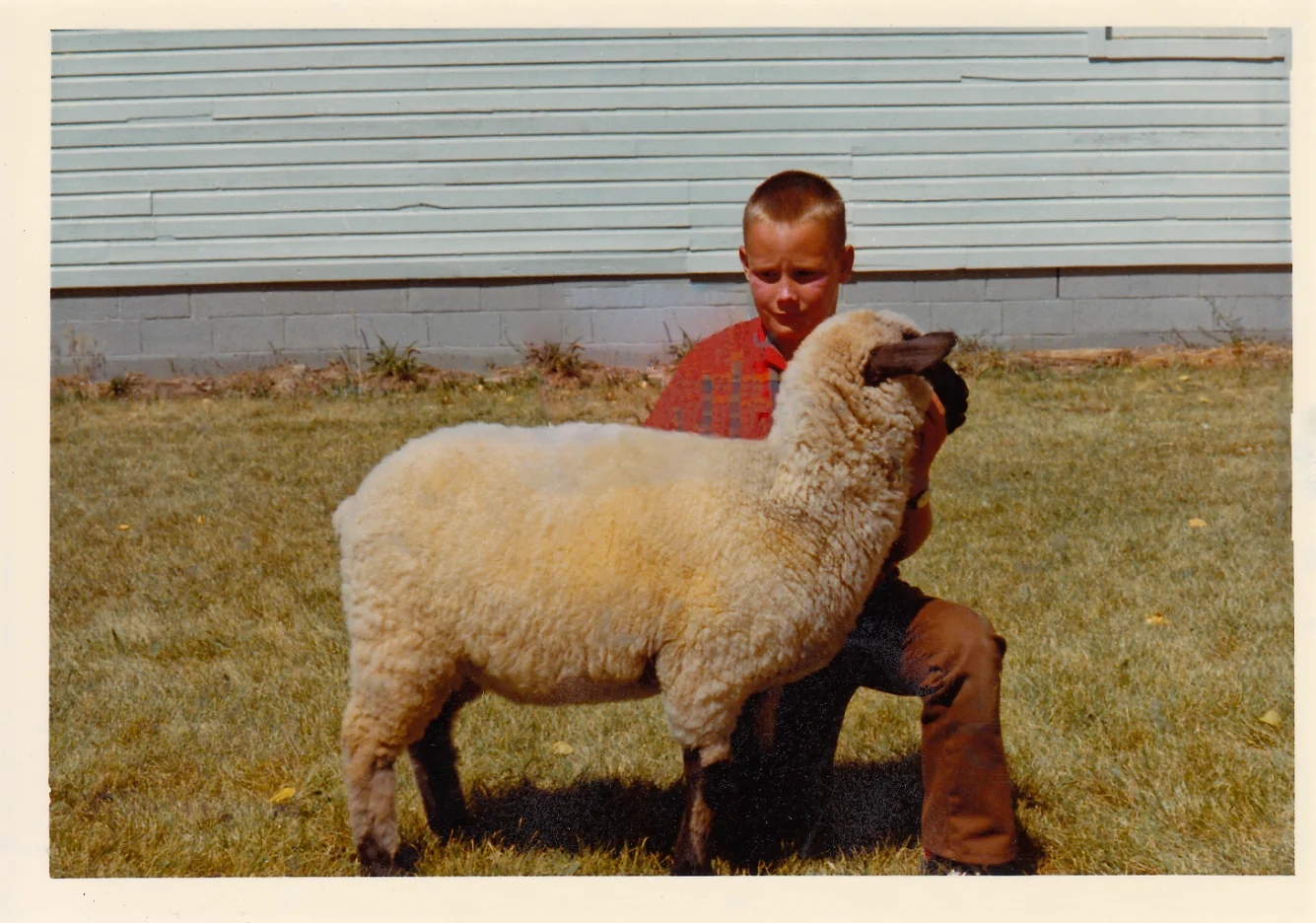
My one and only attempt at showing a lamb in a 4H competition at the county fair (~1973). As my bad attitude indicates, I wasn’t very devoted to the project. After Featherton, the little rascal, ate my participation ribbon, I threw in my shears for good.
So, I can’t be a great source of advice on how to extricate yourself from a herd-think environment. I’ve never run with a large group. Not because I’ve been a rebel my entire life—I most decidedly have not.
It’s just not in my nature to enjoy large social groups, either in real life or online. And I love discussion and explanation and respectful disagreement and have little tolerance for black-and-white thinking.
For me, it’s genetic.
(Plus, quite probably, a formative childhood spent arguing out loud with myself during long hours alone on a tractor. But we can dissect that some other time.)
This is why I mentioned introverts being well-suited to the lone-sheep lifestyle: It’s easier to accomplish if it comes naturally.
Finding your own way out is your first assignment
I don’t recommend looking for someone who can coach you on how to adjust your herd exposure. Finding your own way out, one step and one mistake at a time, is a good developmental exercise for overcoming groupthink mentality.
Just remember that while un-domesticating your perspective can be challenging, it doesn’t have to be lonely.
Lone sheep are still sheep.
They’re just not afraid to wander a bit, mingle with other herds, observe the wider pasture, stick their heads through the fence to check the grass on the other side.
There may not be nearly as many people living this lifestyle as you’re used to being around, but there are still plenty with whom to form a new mutually-respectful circle of friends:
People who:
- Are up for respectfully discussing things they hold strong opinions about.
- Can keep personal discussions confident.
- Don’t think less of you because you’re willing to disagree.
They don’t have to be writers! As I mention in my article about the future of fiction, writers aren’t normal people, and it’s normal people who you need to experience the most.
Find them first, make them your new (smaller) herd, and the rest will come a lot more easily.
Pro tip: Beware the urge to become the leader of your very own herd! Audience capture is as deadly to the art of writing as status-maintenance.
Returning with a message
The final stage of the hero’s journey is the protagonist triumphantly returning to their village with newfound, hard-earned wisdom.
So, if you stay true to your fiction mission, you won’t lose permanent touch with the herd members you leave behind. Remember? The whole point of this lifestyle change is to learn to write stories for them to read.
They’ll be hearing from a future, more-confident you. An ex-herd member with a unique perspective. One who brings news of the lands that lie beyond their limited horizons.
An author who speaks their own language in order to challenge their herd instinct.
That’s you: The future lone sheep who’s going to change their world one book at a time.
~
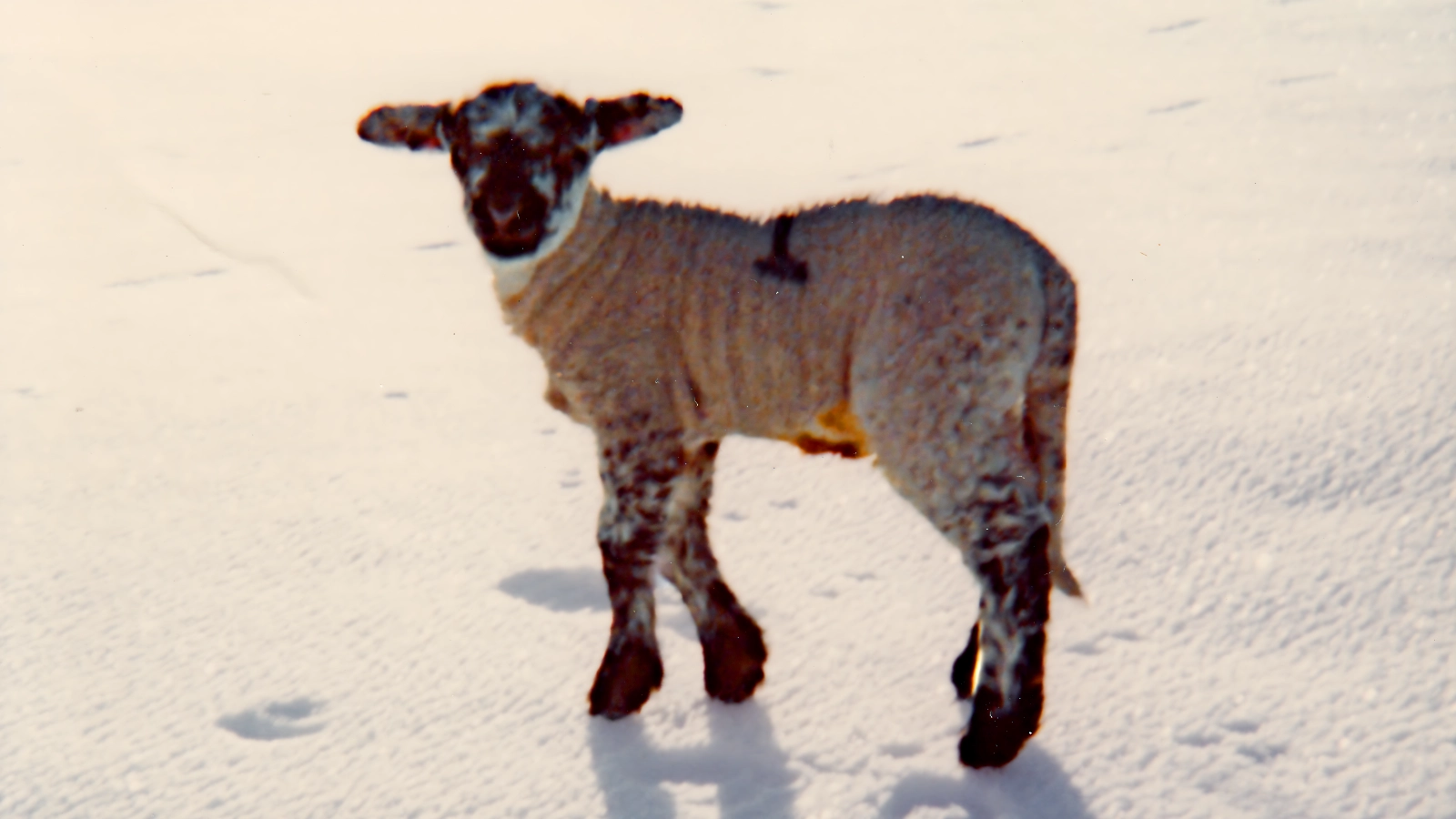
Featured image by S. A. Weigle. Winter lamb on my family’s farm ~1975. Jerome, Idaho.