TRULY, THERE IS NOTHING NEW under the sun when it comes to writing fiction.
The art form has been around for centuries and has been studied to death. There are only different ways of expressing old techniques.
But those old techniques are still mysterious to new writers, of which I’m one. I’ve learned a lot about how to write fiction from some very generous authors’ advice, most of whom will never know how their insights have shaped my work.
I want to be one of those generous authors.
I love talking about all aspects of fiction writing, and I want to be part of that tradition of passing along things I’ve figured out about the craft.
But when an author shares mostly the nitty-gritty about their profession, their audience tends to become mostly writers.
Writers writing about writing for other writers is a well-worn path that can lead to ignoring the most-important audience for a novelist: the readers.
Readers do want to learn what’s going on in the mind of the authors they like—what thoughts and decisions led to the creation of their favorite stories.
They don’t want to read endless dissertations on dialogue and literary devices—the exact stuff I want to obsess over.
Here’s a general rule of thumb: The more your followers would enjoy watching you actually perform your art, the more technical details you can share with them.
- A potter explaining the qualities of clay as she shapes it into a vase: fascinating.
- A dancer explaining body mechanics while demonstrating a complex routine: captivating.
- A writer droning on about pacing while staring at a computer screen for hours on end: a YouTube channel with 300 subscribers and zero comments.
It’s a fine balance, but I think I’ve figured out how to ensure readers remain my number one priority while still satisfying my intense desire to share thoughts about the craft of writing.
The fiction education landscape
After only three months of investigating how to write a novel, I realized that fiction is the domain of both hope and desperation.
Hope, because millions of people of all ages dream of seeing their work in the hands of readers—the more the better.
Desperation, because the first thing a new writer learns is that the obstacles separating them from that dream seem all but insurmountable.
And yet… every day, they hear of people achieving great success. Ordinary people, just like them. Every new literary star that ascends to the heavens sparks the flames of hope in tens of thousands of aspiring authors, all of whom have the same thought:
“There but for just one more class/retreat/workshop go I!”
And out comes the wallet.
Paying it forward
Don’t misunderstand: I’ve got nothing against paying for valuable information. I’ve paid for many classes. Some have been more helpful than others, but overall, I’d say only about 20% of my money was wasted—which beats most of the big personal projects I’ve undertaken in my life.1I’ve blundered my way through remodeling an entire 100+-year-old house. I’d estimate the dollar wastage of that escapade exceeded 30%. Don’t even get me started on how much time I burned redoing mistakes.
I could advertise a class or charge for my study guides and get a least a few customers. But at this point in my author journey, I’m most-comfortable giving away what I’ve learned. It makes me happy to talk about it, and I’d be stressed out if I got paid.
(For some reason, people who pay for advice expect you to interact with them.)
So, at this time, giving back is in order, and in the land of S. A. Weigle, hope shall not be monetized. Your wallet can firmly in your purse or pocket.
My advice on writing is free.
Whether that makes it more valuable than a paid class or priced what it’s worth will be for you to decide.
(No guarantees about what future me will decided to do. That guy is notoriously unpredictable.)
Four outlets for sharing
I don’t do anything without planning.
I know my tendency to drift off-topic when I get carried away with an idea. So, I’ve constructed guardrails to keep myself on track and sharing the correct information in the correct locations.
Here are all the ways I’m interacting with the public and what you can expect to find in each.
1. Website pages
My website, as one would expect, is a little about me but mainly about my products and processes. These pages are not a place for pontificating, but a place for clear explanations leavened by a bit of humor—as long as the humor doesn’t get in the way of a visitor’s understanding.
My site is where my books are fully explained for people considering buying them, plus resources for those who want to dive deeper after reading.
The reader resources page lists everything you can find.
2. Website articles
I’ve seen more than a few author blogs that boil down to “here’s what I did today,” interspersed with random thoughts about random things. I’m aiming a little higher than that.
My goal with articles on my website is to talk about writing and publishing in a way that readers can appreciate. I’ve established three categories, each with its own section.
Macro View
Infrequent explanations of big-picture decisions regarding my website, business processes, and approach to publishing—not commentary on the world at large.
Think “housekeeping,” not “thought leadership.” If a few extra details will help you understand something I’m doing, this is the place you’ll find them.
Sometimes it gets technical—such as my explanation of how AI is incorporated into my publishing business—but if I think clarity requires details, I don’t hold back.
STORYCRAFT
This is writing craft translated into reader experience.
The place I talk about writing from a reader’s perspective without getting lost in the details—how to craft stories for the greatest impact on the most people.
Framing things, even contentious things, so stories can come to life.
the Writing Life
Artificial Intelligence is setting the bar for writing now, and that bar isn’t low.
But there are many more factors than AI shaping the future of storytelling.
Those who can fully embrace the incredible advantages that come from a long life, well-lived, will find that not even a transformative new technology can limit their future.
Who is an author—not as a writer, but as a human—before she places even a single word on the page?
See all The Writing Life articles.
3. My newsletter
If you want the deepest understanding of the mind behind the stories, this is the place.
- Origins of ideas
- Behind-the-scenes decisions
- Life influences on my work
- And some fun!
Not how I do things, but why. These are the details I won’t share anywhere else. And of course, early news about my latest books.
You can sign up for my newsletter here.
4. Study guides
And finally, the outlet for my compulsion to obsess about the minute details involved in authoring stories.
These are the deepest of deep dives into literary analysis and the intricacies of the craft of writing.
They’re the ideal places let myself completely off the leash and explain things to my heart’s content, because they focus on the content of a book immediately after a person has read it. I can use my own writing to illustrate points, while a person studies the guide side-by-side with the open book.
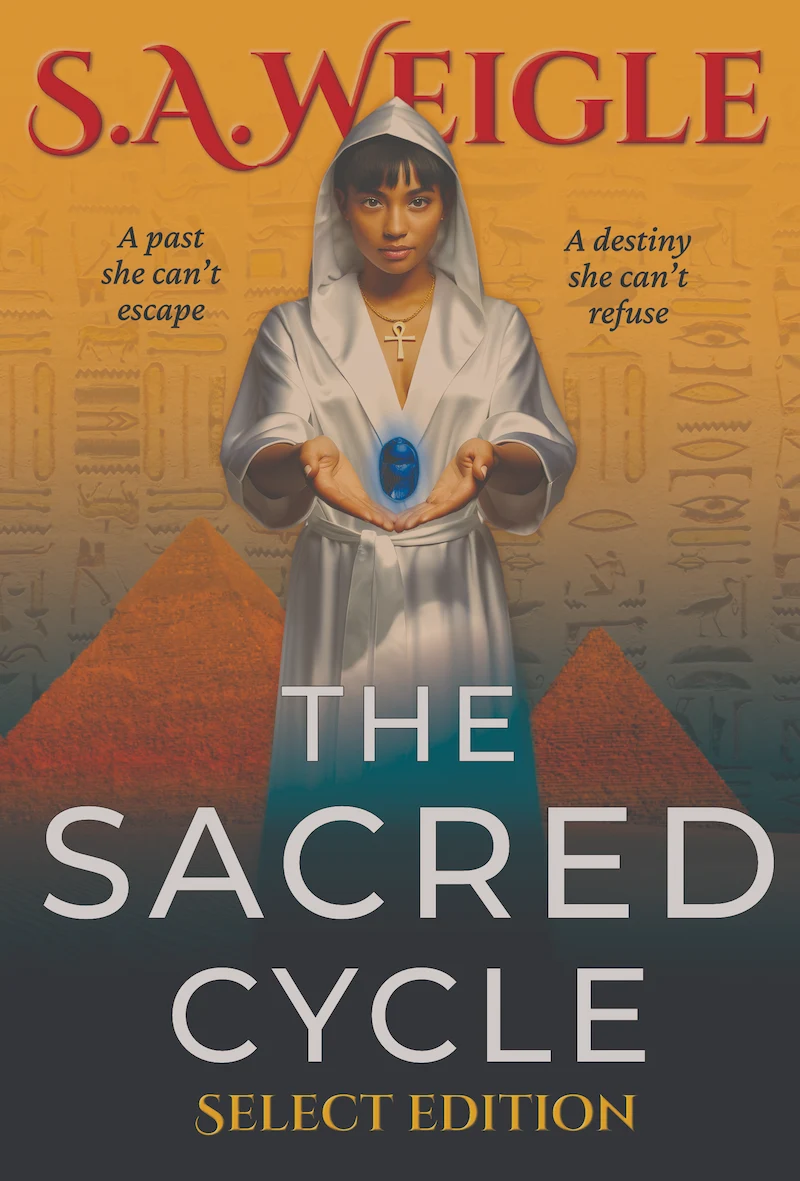
As an example, you can find The Sacred Cycle Study Guide here.
The world of S. A. Weigle is the land of explanations
Hope, as they say, springs eternal. Nowhere is this more true than in the minds of aspiring fiction authors.
In my world, hope is welcome to settle in and make itself comfortable.
And it won’t be charged for the stay.
~
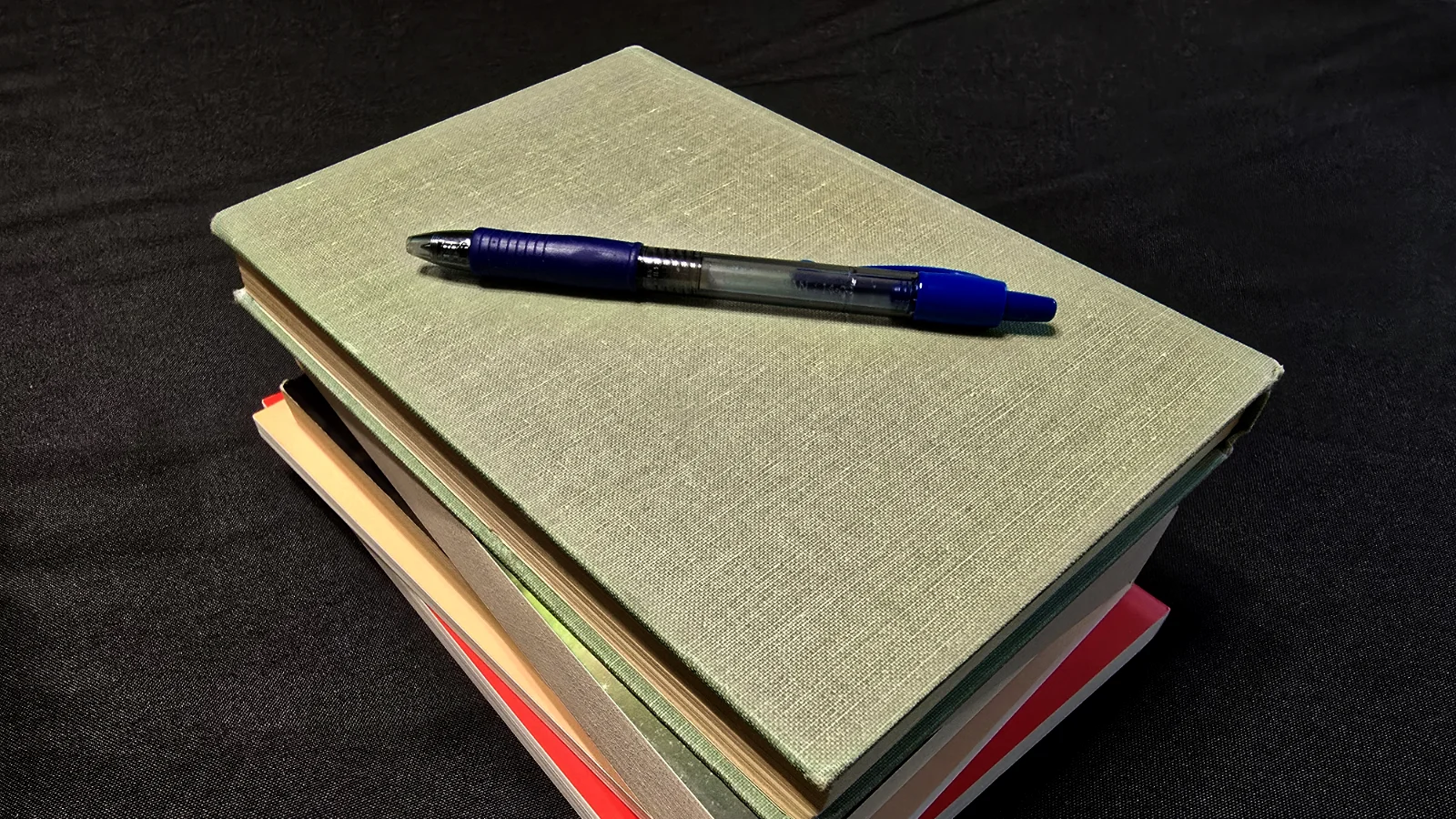
Featured image by S. A. Weigle: Books and pen arranged on my table.
Embedded Notes
- 1I’ve blundered my way through remodeling an entire 100+-year-old house. I’d estimate the dollar wastage of that escapade exceeded 30%. Don’t even get me started on how much time I burned redoing mistakes. ↩︎